A friend of yours tells you about the price of a cryptocurrency that has risen by more than a third. You create an account on exchange and watch a few videos and feel a sudden urge to put your money into. But there’s something wrong. It is possible to discern price movements, but without being aware of what you’re buying or how technology works, or what might occur if something goes wrong.
The learning process of cryptocurrency needs to be completed before any real money is invested. The Coin Course has educational resources covering the fundamentals of blockchain. The best way to learn about these subjects is in a practical manner for those who are just beginning.
Begin with the transaction, and not the price chart.
A well-written tutorial on cryptography must describe the real purpose of cryptocurrency. Bitcoin is a good example. It allows value to be transferred across its network without requiring banks to manage the ledger of transactions. Ethereum is compatible with digital assets as well as applications that use programmable intelligent contracts.
If you simply monitor the market price and watching the market price, neither technology becomes more understandable. Begin by learning the workings of wallet addresses, the reasons why transactions require confirmation from a network and what makes cryptocurrency distinct from the money in a bank account. These basics can help you understand the possibilities and limitations that come with digital assets.
Follow One Transaction Through the Blockchain
It is simpler to comprehend technical concepts when they are connected to an action you have experience with. Imagine that you send cryptocurrency through your wallet a different person. The wallet makes an transaction that is validated using your private keys. The transaction is then submitted to the network, analyzed against its policies and then added to the blockchain.
This procedure can be demonstrated in a practical blockchain tutorial using an application called a block-explorer that allows users to review the transaction’s details and confirm the transaction’s status.
This exercise introduces a crucial security point. Blockchain transactions are not able to be cancelled if a sender has entered the wrong address. Knowing the mechanics of a wallet can help make it easier to use.
Learn to Protect Your Assets before Exploring DeFi
The basic security of your wallet is often ignored by novices who are more interested in finding lucrative investments. The private key you use to access your wallet is what controls access to your cryptocurrency. A recovery phrase permits users to re-open a appropriate wallet and, if necessary, access its assets.
You can share this message with someone else, and you may put your financial assets at risk. Useful blockchain guides should explain the differences between custodial exchanges and software wallets as well as hardware wallets.
Also, they should be aware of phishing attacks, suspicious connections to wallets, and dangers associated with giving smart contracts permissions without knowing their. These lessons are particularly important in the exploration of the decentralized financial system. Users communicate directly with each other and do not depend on traditional intermediaries.
Learning Crypto Trading without Confusing Activity with Progression
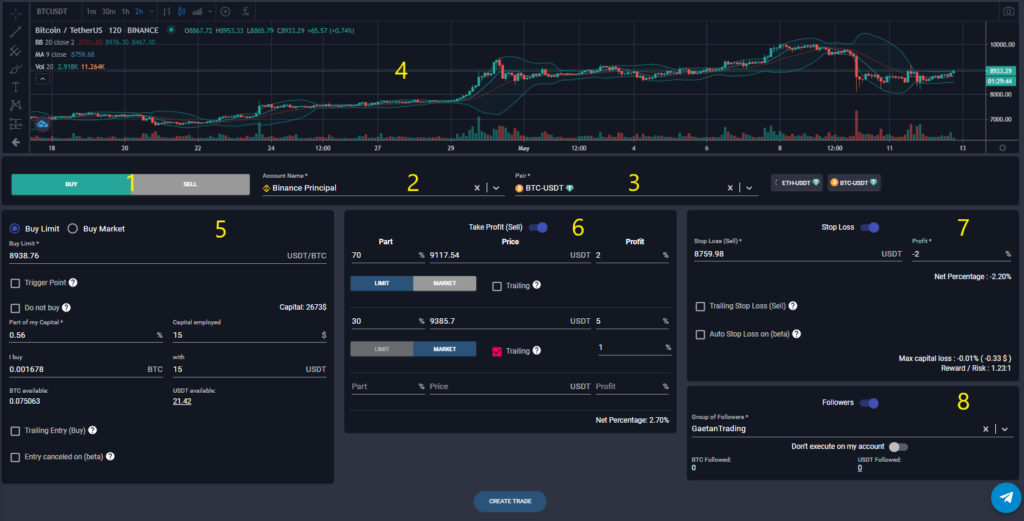
The people who are interested in learning cryptocurrency trading usually start with candlestick patterns and technical indicators. They are helpful but they should not be used to replace the need for a thorough knowledge of the risks. Before you make a trade take into consideration how much capital you could be willing to risk or what might invalidate your trading strategy, and how transaction fees can affect your outcomes.
Limit orders permit you to set the price, but execution cannot be 100% guaranteed. Market orders give priority to execution immediately. Leverage can increase risk since very small price changes can result in significant losses.
The beginner can practice in analyzing markets as well as making hypothetical trades before they commit real funds. The journal helps determine whether the decisions are based on an established strategy or react to fear and excitement.
Enhance Your Questions to Discover Topics that are more advanced
Once the fundamentals are clarified the subjects like DeFi Staking NFTs, staking contracts are easier to assess. To ask how much DeFi platforms can charge is not the best option. Instead, inquire about what the source of the yield is and what kind of price users are willing to be willing to pay.
When looking at NFTs it is essential to differentiate between the owner of the NFT and that of the original artwork.
Understanding the concept of staking rewards can help you decide whether they’re a form of compensation for participants helping to secure a system or if the rewards come from arranging another financial arrangement. The Coin Course brings these topics into a broader cryptocurrency learning experience, helping readers develop knowledge across different areas of the industry.
Learn to create knowledge that is longer-lasting than market trends
Prices of cryptocurrencies are constantly evolving, but an understanding of the basics is beneficial. Knowing about blockchain transactions as well as wallet safety trading mechanisms, decentralized applications and security of wallets will enable you to analyze new ventures instead of relying solely on the claims of marketing.
You don’t need to master everything immediately. Once you understand the basics, it’s time to move on to more advanced topics. The aim isn’t to become an expert overnight. The goal is to gain enough knowledge to recognize risks and opportunities, ask questions that are more intelligent and make informed choices as the cryptocurrency market develops.