The month is done. The sales were good, the P&L is in profit and nothing is to be terribly incorrect.
Verify the restaurant’s bank account.
You didn’t get the number you were hoping for.
This disconnect can be frustrating for restaurant owners because they feel that profits and cash on hand should be the same. They are not. A P&L measures the performance of the business’s finances over a specific time period, whereas a bank account shows the exact timing of money going into and out of he business.
Knowing the differences could help restaurant owners shift their perception of restaurant financials.
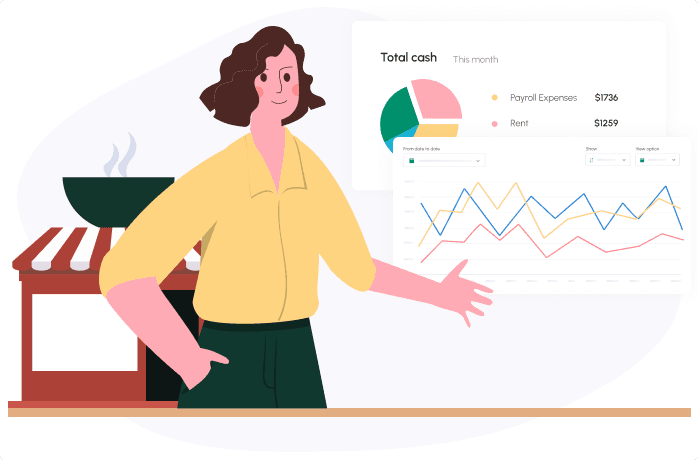
Take a look at what happens during an ordinary week. Customers pay for meals. Employees are required to be paid. Invoices will be sent out with meals and beverages delivered. Rent is due. Credit card payments are timed. The tax on sales is an obligation.
The buying for next week has already begun.
If you only focus on revenue and the final profit figure, it is easy to miss a a great deal of activity.
The Secret Could Be Hidden in the Prime Cost
Food, drink and labour costs merit a closer look when restaurant profitability starts to decline.
Prime cost is made up of both goods and labor. Bookkeeping Chef’s provided guidance places primary costs between 60% to 65 percent for a wide range of restaurants and emphasizes monitoring on a weekly basis as opposed to waiting until the end the month.
Effective management of prime costs is less about obsessing over a single percentage and more about noticing movement in the early stages.
Suppose the restaurant normally performs close to its target however, this week’s rate increases. Maybe the number of overtime hours is up. The cost of beverages could remain the same, while food prices increased. The higher proportion of food might prompt the operator to consider examining purchasing, waste management, portions and menus, or even vendor invoices.
The percentage is the key. The activity of the restaurant itself provides the answer.
This conversation is possible because everyone is able to recall what transpired.
Two or three weeks later after that, the details become harder to decipher.
The Vendor Bills are then delivered.
The restaurant is expected to pay in the future for the ingredients it purchases. It’s due to this fact that analyzing profits alone will not address all cash issues.
Vendor invoices should be recorded, received as well as tracked until they are paid. This can be a lot of work in the case of a business with many suppliers.
Automating accounts payable helps to streamline the process, reducing repetitive handling of bills and payment information. These bookkeeping systems are also able to provide the user with a more clear picture of debts that haven’t yet reached the account of the bank.
This is useful, because the balance of your bank account may appear healthier than a restaurant’s actual financial situation.
There is currently an amount of $80,000 in the account. This amount could mean something different if rent, payroll vendors, or other commitments consume a significant portion over the next few days.
That leads naturally to cash flow forecasting.
Instead of asking “How much cash do we have?” the better question becomes “What could be the fate of our cash following the money we’re expecting to receive and the obligations we are already aware about?”
The distinction is important when deciding whether this is a comfortable week to repair equipment, make an additional purchase, or to preserve liquid funds.
A portion of the Cash Was Never Yours
The sales tax illustrates this point in particular.
The cash restaurants receive from their customers will eventually have to be dealt with in accordance with the tax requirements. When these dollars are mentally combined with operating cash, it could create a false impression of the cash available for spending.
Records that are consistent support sales tax compliance while also giving the management a better understanding of the restaurant’s financials.
This is a reason why restaurant accounting can be more effective in situations where financial responsibility isn’t seen as separate islands.
Prime cost affects margin. COGS and future payments are affected by purchases made by vendors. The percentage of labor and cash are affected by the payroll. Sales tax affects the availability of cash. P&Ls record financial performance while forecasting lets management take a look ahead.
The pieces connect.
Bookkeeping Chef uses restaurant-focused reporting and system integrations that help integrate these pieces. Specialized outsourced bookkeeping services are a great alternative for those who aren’t able to manually reconcile financial data. They will take care of a lot of the accounting tasks without taking the owner away from the financial discussion.
The last point is vital.
Restaurant owners shouldn’t stop studying the literature just because they are handled by someone else. Owners should be given information that helps them comprehend what’s happening.
So when the P&L reports that the restaurant earned money, but the bank account feels extremely unbalanced, don’t think that some of the figures must be incorrect.
What was the difference between them?
The answer to this question will give you more insight into the restaurant than just the number.